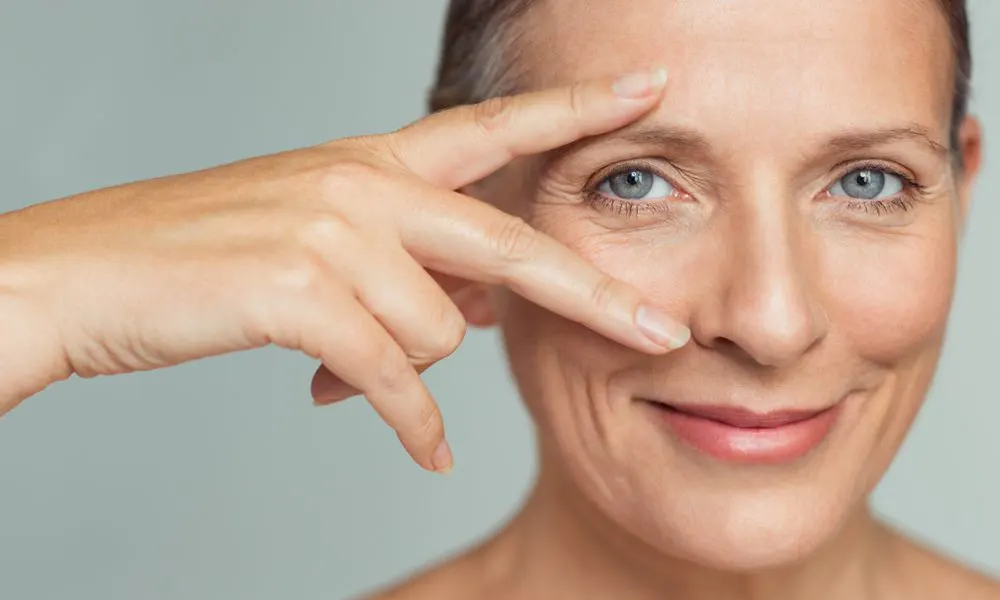
Wrinkles and sagging should not be treated as one condition. A dynamic line, a crease etched into the skin, true volume loss, tissue descent and cervical laxity come from different layers. The useful first question is which structure creates the image—not which treatment is marketed as the strongest.
Match the treatment to the cause
| Main finding | Possible approach | Important limitation |
|---|---|---|
| Dynamic expression line | Conservative neuromodulator | May alter brow position and does not lift tissue |
| Static fine line or photodamage | Skincare, resurfacing or selected dermatologic treatment | Cannot correct jowls or neck laxity |
| True volume loss | Selected filler or microfat | Adding volume does not correct descent |
| Brow or cheek descent | Selected video-assisted repositioning | Does not treat every eyelid or skin concern |
| Lower-face descent | SMAS or Deep Plane facelift when indicated | Does not erase pigment or stop aging |
| Platysma and cervical laxity | Neck Lift or selected Deep Neck treatment | Cannot overcome every skeletal limit |
Dynamic lines require movement assessment
Forehead, glabellar and crow’s-feet lines should be observed at rest and during expression. The frontalis may be compensating for a low brow or heavy upper eyelid. Weakening it without recognizing that compensation can create brow heaviness.
Neuromodulators reduce selected muscle activity temporarily. A static crease may remain even when movement decreases. The goal is not a motionless face but a measured reduction that preserves recognizable expression.
Skin treatments address a different layer
Laser, peels, microneedling and medical skincare can improve selected texture, pigment or fine lines. Choice depends on skin type, pigment history, active disease, previous energy treatment and acceptable downtime. Surface improvement cannot release retaining ligaments or reposition descended fat compartments.
Radiofrequency and focused ultrasound may produce modest tightening in selected patients. Small prospective studies evaluate specific devices and short follow-up. Reaching a named depth does not make an energy treatment equivalent to surgical release and fixation. Burns, pigment change, fat loss, fibrosis and nerve symptoms are possible.
Volume should restore a deficit, not simulate lifting
Microfat can soften selected hollows in the temples, A-frame, lid-cheek transition or cheek. Retention varies, and grafted fat changes with weight. Hyaluronic-acid filler can be useful in selected planes but may create heaviness or edema, particularly around the eyelids.
Adding volume over descended tissue can obscure facial contours without correcting position. Nanofat has a superficial skin-quality role and is not a structural filler or a lifting procedure.
When surgery addresses the cause
A facelift becomes relevant when lower-face tissue descent and skin laxity cannot reasonably be corrected by surface treatment or volume. Deep Plane is one technique; SMAS plication and other approaches may be preferable in other anatomies. Comparative evidence remains limited and does not establish universal superiority.
Video-assisted brow or midface surgery, Hybrid Blepharoplasty, Neck Lift and Deep Neck address different regions. Combining them is justified only when each procedure has a separate anatomical indication.
Previous procedures may change the visible problem
Filler, biostimulators, threads, PMMA, silicone and energy treatments can create edema, fibrosis, irregularity or volume that mimics aging. Dermatologic ultrasound may help map material and altered tissue before further treatment.
Hyaluronidase acts on hyaluronic acid only. It cannot remove permanent filler, biostimulators or fat, and it should not be used as a generic reset.
A practical decision sequence
- Exclude active inflammation or treatment complications.
- Identify whether the dominant issue is movement, skin, volume or position.
- Treat the least extensive layer that can change the concern.
- Reassess before adding a second modality.
- Explain which changes will remain untreated.
Risks and realistic expectations
Injectables can cause vascular or inflammatory complications. Devices can injure skin, fat or nerves. Surgery can cause bleeding, infection, scarring, altered sensation, nerve weakness, asymmetry, anesthetic events and revision. No option guarantees complete wrinkle removal, perfect symmetry or permanent lifting.
Planning for international patients
Remote consultation can identify broad concerns, but the plan is confirmed in person. Major surgery is performed at Hospital São José with anesthesia and postoperative monitoring. The concierge service coordinates accommodation and transport, while medical clearance determines recovery and flight timing.
Read more about sequencing position, volume and skin treatment and the limits of skin-tightening devices.
Clinical sources
- Prospective comparison of radiofrequency and focused ultrasound
- Deep Plane versus SMAS plication facelift: prospective cohort
This article is educational and does not replace individualized medical evaluation.