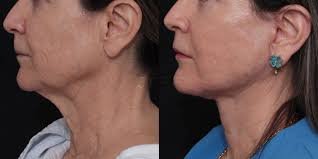
Swelling is expected after facial surgery, but its duration and pattern vary. Persistent or increasing swelling should not be treated as a single diagnosis. It may reflect normal tissue healing, a fluid collection, infection, medication effect, malar edema, filler-related inflammation, lymphatic disruption or another medical problem.
When swelling may still be expected
| Pattern | Possible interpretation | Recommended response |
|---|---|---|
| Gradual improvement with mild day-to-day fluctuation | Often part of normal healing | Follow the surgical team’s instructions and scheduled reviews |
| Sudden one-sided expansion, pain or firmness | Possible hematoma | Urgent surgical assessment |
| Redness, warmth, fever or drainage | Possible infection | Prompt medical assessment |
| Persistent lower-eyelid or malar swelling | Festoons, malar edema or prior filler contribution | Anatomical and treatment-history evaluation |
| Breathing difficulty, chest pain or calf swelling | Possible systemic emergency | Immediate emergency care |
Why some patients swell longer
Combined procedures, extensive dissection, previous operations, baseline festoons, lymphatic vulnerability, thyroid or renal conditions, allergies, medications and previous injectables can prolong edema. Fillers—especially in the under-eye and midface—may retain water or contribute to malar edema. Biostimulators, threads and permanent materials can also alter tissue response.
The role of dermatologic ultrasound
When prior injectable type, location or complication is uncertain, dermatologic ultrasound may help identify material and guide the plan. Hyaluronidase acts only on hyaluronic-acid filler; it does not dissolve PMMA, silicone, biostimulators or fat, and it may not fully reverse chronic edema or fibrosis. Learn about injectables before facial surgery.
Treatment depends on the cause
Head elevation, activity modification, prescribed medication and selected postoperative therapies may be recommended, but more treatment is not always better. Aggressive massage, unsupervised diuretics, repeated injections or energy devices can be inappropriate in early healing. A hematoma, infection or salivary complication requires a different response from ordinary edema.
Lower eyelid and malar edema
Under-eye bags, malar edema and festoons are distinct. Blepharoplasty can treat selected eyelid fat and skin but does not reliably eliminate fluid-related festoons or genetic pigmentation. Adding volume may worsen some edema patterns. Read the diagnostic guide to malar edema and festoons.
Recovery and international travel
International patients should remain close to the surgical team during the early phase. Major facial surgery commonly requires at least 15 days in Brazil, adjusted to the procedure and clinical evolution. A patient with unexpected swelling may need to postpone a flight. Belvivere coordinates hospital care, early reviews in Criciúma and logistical support.
When to contact the team
Promptly report sudden asymmetry, escalating pain, vision change, difficulty breathing or swallowing, fever, rapidly increasing swelling, calf pain or wound drainage. Online photographs can help triage, but they do not replace examination when a complication is suspected.