Male Facelift: Anatomy, Scars and Recovery
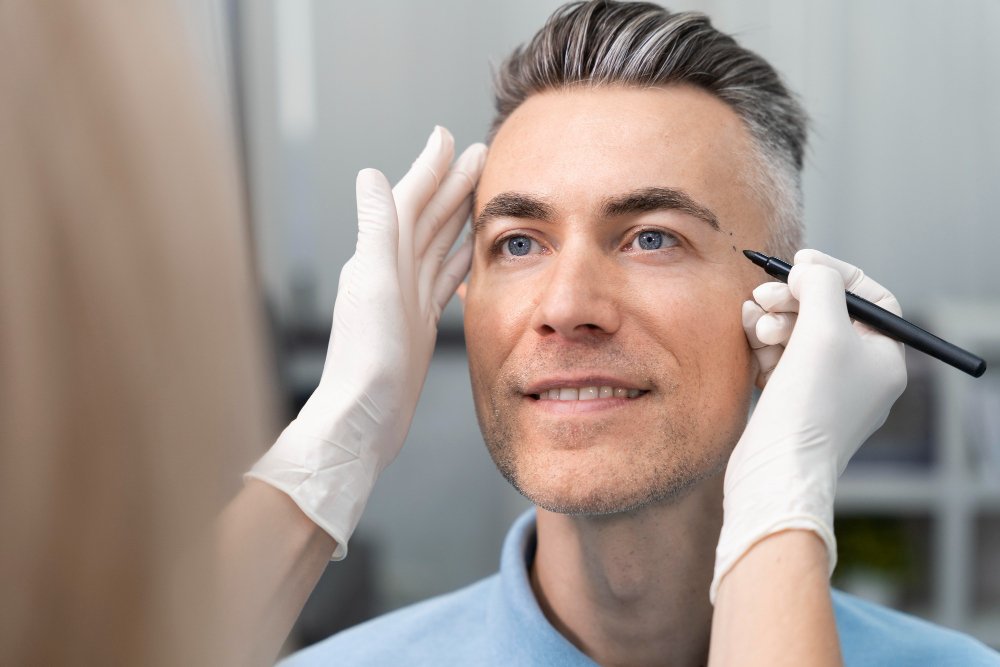
A male facelift is not a separate standardized technique. It is facial surgery planned around the individual patient’s anatomy, hair-bearing skin, beard pattern, scars, skeletal proportions and goals. The priority is usually to improve signs of aging while preserving identity—not to impose a stereotyped “masculine” face.
What may differ in male patients?
Male facial skin is often thicker and more vascular, and beard-bearing skin changes incision and hairline planning. Some men have limited hair that offers less scar camouflage. These factors can influence bleeding risk, scar placement and how the skin is redraped around the ear.
However, sex alone does not determine technique. Tissue descent, volume distribution, neck anatomy, skin quality and prior procedures remain more important than generalizations.
Choosing the scope of surgery
Some patients primarily need lower-face and neck treatment; others also have midface descent, brow changes or eyelid concerns. “Mini facelift” describes a limited area, not a specific surgical plane. Deep Plane, SMAS-based and preservation approaches are selected according to anatomy and prior surgery—not because one is universally superior.
Neck fullness may come from superficial fat, platysma, deep fat, glands or skeletal anatomy. A Deep Neck procedure is added only when deeper structures require treatment.
Scars and beard-bearing skin
Incisions are designed around the ear and hairline, but no facelift is scarless. Moving beard-bearing skin too close to the ear can alter shaving patterns or create hair in an unwanted location. Excessive tension can widen scars, distort the earlobe or affect hairlines. Deep support should reduce reliance on skin tension.
Previous procedures and medications
Patients should disclose fillers, biostimulators, threads, energy treatments, hair-transplant surgery and previous facial operations. Dermatologic ultrasound may be required. Blood-pressure medication, anticoagulants, supplements, testosterone or other hormones, nicotine and alcohol must be discussed; medications should never be stopped without medical guidance.
Risks and recovery
Possible complications include hematoma, bleeding, infection, seroma, delayed healing, skin loss, unfavorable scars, hairline or beard displacement, asymmetry, prolonged swelling, altered sensation, temporary or permanent facial-nerve weakness and revision surgery. Male sex can be associated with greater vascularity, but individual risk assessment is essential.
Swelling, bruising, numbness and tightness are expected early. Social recovery usually requires several weeks, and scars and residual edema evolve for months. Surgery improves aging signs but does not eliminate every fold or stop future aging.
Traveling to Brazil
| Recovery Stage | Typical Timeline |
|---|---|
| Initial swelling & bruising | First days after surgery |
| Social recovery | Several weeks |
| Scar & residual edema evolution | Several months |
| Arrival before surgery | 1–2 days prior |
| Minimum stay in Brazil | At least 15 days |
International patients begin with video consultation and photographs, arrive in Criciúma one or two days before surgery and generally remain at least 15 days. Surgery is performed in a hospital, and return travel requires examination and medical clearance. Concierge support assists with local logistics.
See how facelift scope is selected, the realistic recovery timeline and neck lift planning.