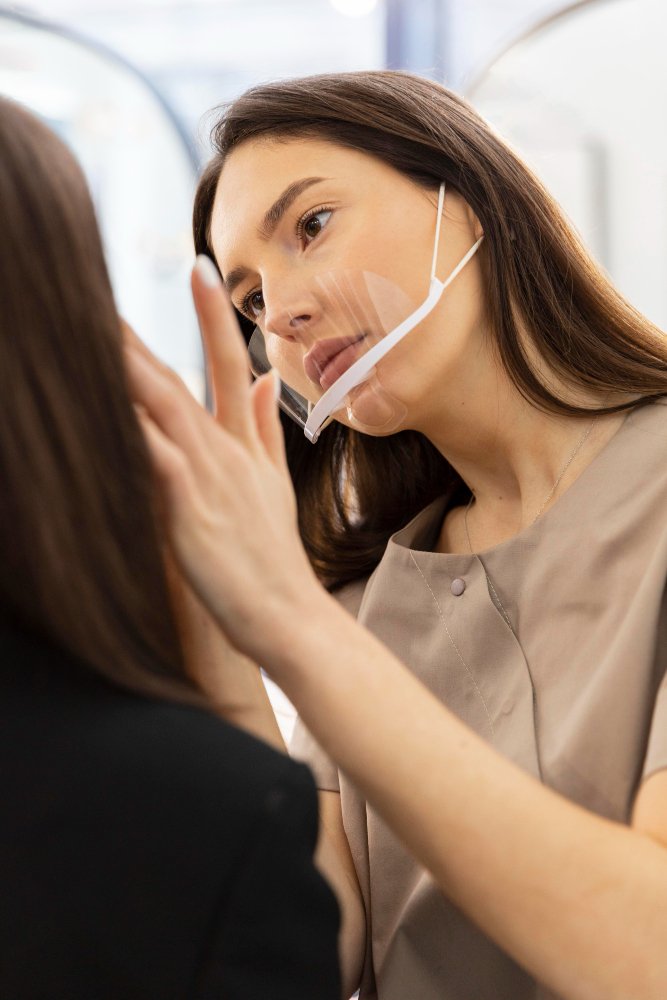
A patient may have a lower-eyelid concern without needing lower blepharoplasty. If the dominant problem is cheek descent, treating the eyelid alone may not improve the lid-cheek relationship. Conversely, a patient with isolated orbital-fat prominence may not need a midface lift. The diagnosis should determine the region treated.
Three different anatomical situations
| Pattern | Primary finding | Possible direction |
|---|---|---|
| Eyelid-dominant | Prominent lower-eyelid fat with stable cheek position | Conservative lower blepharoplasty |
| Midface-dominant | Descended cheek with elongated lid-cheek transition | Selected video-assisted midface repositioning |
| Combined | Fat prominence, support issues and meaningful cheek descent | Combined or staged treatment after risk assessment |
Can a midface lift be performed without blepharoplasty?
Yes, in selected patients. Video-assisted midface surgery addresses descended cheek tissues through small scalp incisions and endoscopic visualization. If eyelid skin, fat compartments and support do not require treatment, adding blepharoplasty would create unnecessary intervention.
The reverse is also true: an isolated lower blepharoplasty may be sufficient when the cheek position is appropriate. Surgery is not a menu, and a “complete” result does not mean operating on every adjacent region.
How the lower eyelid is protected
Evaluation includes eyelid tone, ocular vector, canthal support, dry-eye symptoms, prior surgery and the amount of tissue required for closure. When indicated, Dr. June uses a transconjunctival approach to treat the lower fat compartments selectively. Canthopexy is added only when support is needed.
Excessive skin or fat removal can contribute to hollowing, retraction or an altered eye shape. The least extensive effective plan helps preserve function and identity.
Volume loss is not the same as tissue descent
Microfat may improve true structural hollowing. Nanofat has a superficial skin-quality role. Neither automatically corrects a low midface. Conversely, lifting the cheek does not treat pigment, visible vessels or every tear-trough shadow.
Fillers can alter the examination
Persistent hyaluronic acid may create fullness or edema and obscure the natural lid-cheek transition. Biostimulators, threads, PMMA, silicone and prior surgery may cause fibrosis or altered planes. Dermatologic ultrasound may be used before choosing observation, targeted hyaluronidase, surgery or staged treatment.
Risks and recovery
Blepharoplasty may cause dry eye, chemosis, bleeding, asymmetry or lower-eyelid malposition. Midface surgery adds risks of temporal discomfort, altered sensation, fixation-related irregularity and temporary or persistent weakness involving nearby nerve branches. Combination surgery usually creates more swelling and a longer social recovery than an isolated procedure.
Sudden visual change, severe pain, rapidly increasing swelling or new facial weakness requires prompt medical assessment.
International-patient pathway
A preliminary plan can be discussed remotely, but the definitive indication is confirmed after examination in Criciúma. Surgery is performed at Hospital São José. The concierge team assists with accommodation and transportation; medical follow-up and flight clearance remain with the clinical team.
Related reading: video-assisted midface recovery and swelling after blepharoplasty.
This article is educational and does not replace an individualized medical evaluation.