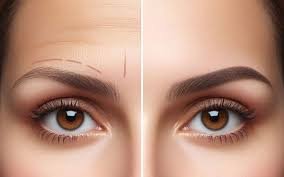
Blepharoplasty and brow lift treat different structures. Some patients need one procedure, some need both, and others need neither. The decision should follow a dynamic examination of the brow, forehead, eyelids, eye health, volume, and previous treatments—not a home “mirror test.”
Why upper-eyelid heaviness has several causes
Upper-eyelid hooding may reflect true skin excess, brow descent, frontalis compensation, ptosis of the eyelid margin, loss of volume, or asymmetry. Raising the brow manually can illustrate the relationship between regions, but it cannot establish diagnosis, surgical vector, or how much skin can safely be removed.
| Finding | Procedure that may be considered | What it does not automatically solve |
|---|---|---|
| Measured upper-eyelid skin excess | Conservative upper blepharoplasty | Brow descent or true ptosis |
| Low brow with frontalis compensation | Video-assisted or selected open brow surgery | Independent eyelid skin excess |
| True eyelid ptosis | Levator or conjunctivo-Müller correction | Brow position and skin quality |
| Combined brow and eyelid findings | Combined or staged treatment | Perfect symmetry or permanent arrest of aging |
Dr. June’s preservation-based approach
In upper blepharoplasty, Dr. June generally favors minimal skin removal and orbicularis preservation. Excessive resection can contribute to hollowing, difficulty closing the eye, dryness, or an operated appearance. When brow descent is the main driver, treating only the eyelid may leave heaviness or lead to over-resection.
Video-assisted brow surgery uses small scalp incisions to release and reposition selected upper-face tissues with individualized fixation. It does not remove eyelid skin, is not scarless, and is not suitable for every hairline or pattern of laxity. Learn about video-assisted brow lift indications and risks.
Botox and previous procedures
Botulinum toxin can change brow position by reducing frontalis compensation, so timing and injection pattern should be documented. Fillers, threads, previous eyelid surgery, and energy treatments can also change anatomy. Dermatologic ultrasound may help when filler type or location is uncertain.
Risks and realistic recovery
Blepharoplasty risks include dryness, chemosis, lagophthalmos, asymmetry, visible scars, lid malposition, bleeding, infection, and rare visual complications. Brow surgery adds risks such as scalp numbness, hair loss around incisions, fixation problems, sensory changes, and temporary or persistent motor weakness.
Swelling and bruising may move between the forehead and eyelids. Many patients become socially presentable before sensation, scars, and position have fully settled. Healing continues for months, and neither procedure guarantees symmetry or a particular emotional response.
Planning the right combination
The aim is not to “open” every eye to the same shape. It is to preserve expression and identity while treating the responsible anatomy. Dr. June’s Hybrid Blepharoplasty and video-assisted upper-face surgery can be combined when each has an independent indication.
International patients receive hospital coordination when appropriate, early postoperative reviews, and logistical assistance through the Belvivere concierge. Final travel clearance depends on recovery.