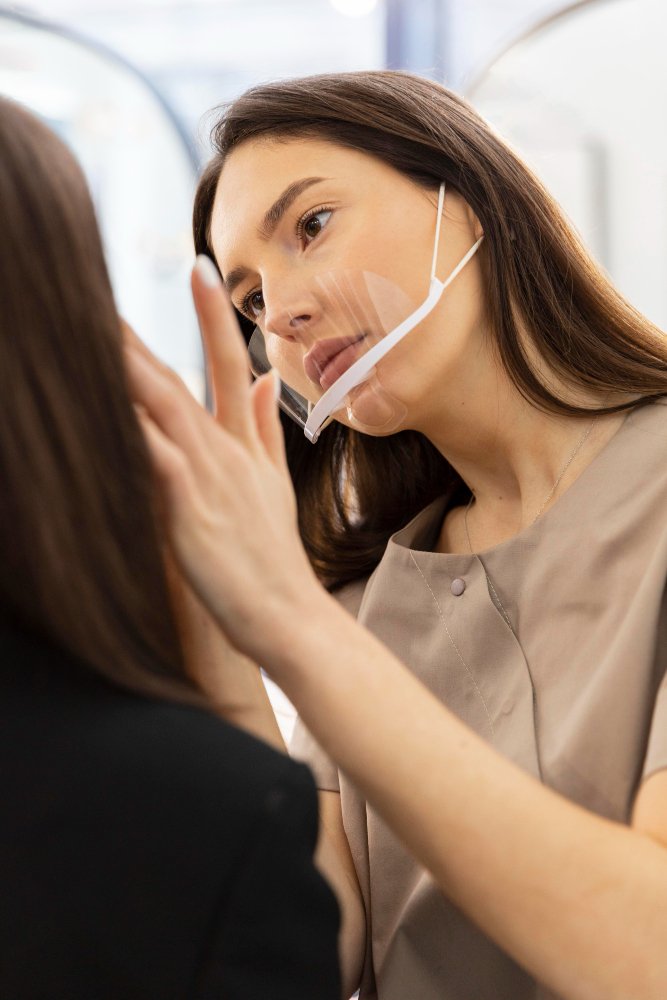
A natural-looking result is not defined by making surgery undetectable or by recreating a younger photograph. It means improving selected concerns while preserving recognizable proportions, expression and the relationship between facial regions. Naturalness depends more on diagnosis and restraint than on one technique.
What can make a result look artificial?
| Planning problem | Possible visible effect | More thoughtful approach |
|---|---|---|
| Excessive filling | Puffiness, distorted light reflection or malar edema | Restore only diagnosed volume deficits |
| Skin placed under excessive tension | Pulled appearance, distorted ear or widened scars | Use deeper support where indicated and redrape skin carefully |
| One fashionable vector for every face | Changed brow shape or loss of individual character | Match direction and extent to anatomy |
| Treating one region in isolation | Imbalance between eyelids, cheek, jawline and neck | Assess the face as a connected system |
| Ignoring previous procedures | Unexpected swelling, fibrosis or contour problems | Review history and use ultrasound when appropriate |
Preserving identity requires individualized goals
Facial identity comes from bone structure, soft-tissue distribution, asymmetry, expression and culturally or personally meaningful features. Surgery should not impose the same brow height, cheek volume or jawline on everyone. A useful consultation begins with what the patient wants to preserve as well as what they hope to improve.
Natural does not mean minimal treatment
A small procedure can look unnatural if it treats the wrong problem, while a carefully planned combination can remain harmonious. Conversely, not every region needs treatment. The scope may include video-assisted brow surgery, Hybrid Blepharoplasty, facial fat grafting, facelift or neck surgery—but only when each component has an anatomical indication.
Deep Plane, fat grafting and injectables
Deep Plane is not the only route to a natural result and is not universally superior. It can be useful for selected lower-face and midface descent. Fat grafting can restore diagnosed volume loss, but integration varies and overcorrection creates its own problems. Hyaluronic acid fillers can be appropriate in selected patients, while repeated or excessive injections may alter contour and tissue behavior.
Realistic limitations
Natural-looking surgery still produces scars, swelling and temporary changes in expression. Perfect symmetry cannot be promised, and aging continues. Skin quality, skeletal support, weight changes—including rapid loss with GLP-1 medicines—and previous treatments influence the result.
International-patient planning
Belvivere performs indicated surgery through a hospital structure and coordinates logistics through its international service. Major facial surgery generally requires at least 15 days in Brazil, with travel clearance based on recovery.
Read about three-dimensional rejuvenation, evaluating viral surgery trends and individual facial analysis. The goal is not a standardized “natural” face—it is a result that remains consistent with the patient’s own anatomy and identity.