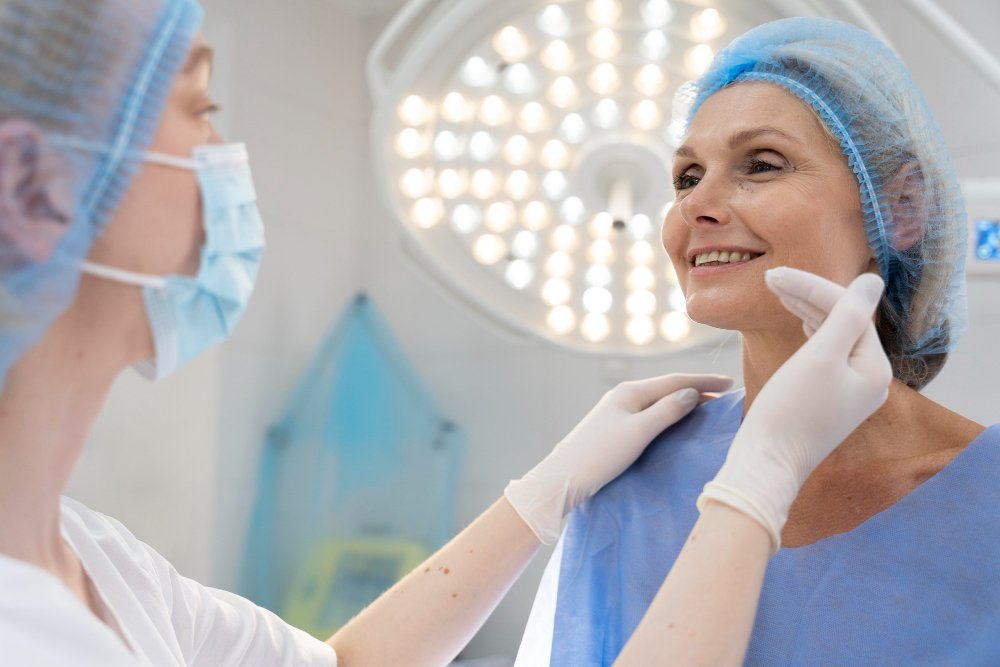
When considering facial rejuvenation, many patients ask a crucial question: why can the face look artificial after a facelift? The fear of ending up with a “windblown,” tight, or frozen appearance is completely valid. A facelift should enhance your natural beauty, restoring the definition of youth without making it obvious that you underwent surgery. However, when specific surgical techniques or recovery protocols are not perfectly executed, an artificial facelift outcome can occur. Understanding the underlying anatomy and surgical approaches is the best way to prevent an artificial facelift look and ensure a completely natural result.
If you are exploring your options for facial rejuvenation, it is essential to consult with highly skilled professionals. For those looking for world-class care, you can learn more about premier options by visiting Belvivere. Choosing the right surgical team is the single most important factor in avoiding an artificial facelift.
The Anatomy of an Unnatural Result
To understand why an artificial facelift happens, we must first look at how facial aging actually occurs. Aging is not just a matter of skin stretching; it involves the loss of bone density, the redistribution of deep fat pads, and the loosening of the underlying muscle and connective tissue layer known as the SMAS (Superficial Musculoaponeurotic System).
[Aging Process] -> Loss of Bone/Fat & Laxity of SMAS Layer
       |
[Traditional Facelift] -> Pulls ONLY the skin horizontally = Artificial Facelift
       |
[Modern Facelift] -> Lifts the deep SMAS layer vertically = Natural Youthfulness
When a surgeon attempts to fix facial aging by simply pulling the skin tight, disaster strikes. This skin-only approach is the primary reason why someone might develop an artificial facelift appearance. Skin is elastic and is meant to drape softly over the underlying structures, not to act as a structural anchor.
The Problem with Horizontal Pulling
In the early days of plastic surgery, traditional techniques often pulled the facial tissues horizontally toward the ears. This directional pull is a major contributor to an artificial facelift.
The Windblown Look: When skin is pulled backward horizontally, the mouth can look wider, the corners of the lips stretch unnaturally, and the skin over the cheekbones looks plastic and overly tight.
The Vertical Solution: Natural aging causes tissues to drop vertically (downward). Therefore, to avoid an artificial facelift, the surgical correction must lift the tissues vertically (upward), reversing the exact path of gravity.
Neglecting the Deep Tissue Layers (SMAS)
A modern, successful facial rejuvenation procedure relies heavily on altering the deeper layers of the face. If a surgeon ignores the SMAS layer and relies solely on skin tension to achieve the lift, the skin will inevitably stretch out, leading to distorted features and an artificial facelift look.
Key Takeaway: True facial youthfulness comes from repositioning the deep muscles and fat, not from stretching the skin. When the deep layers are lifted correctly, the skin can be draped gently over the new foundation without any tension, completely eliminating the risk of an artificial facelift.
Common Signs of an Artificial Facelift
It is quite easy for the trained eye—and sometimes even the untrained eye—to spot when someone has had an unsuccessful procedure that resulted in an artificial facelift. Here are the most common signs that indicate a surgery lacked the necessary artistic precision:
1. The “Windblown” Mouth and Distorted Lips
As mentioned, a horizontal vector of pull stretches the corners of the mouth. This creates a perpetual, unnatural smirk or an unnaturally wide smile, which is a classic hallmark of an artificial facelift.
2. Displaced Tragus and Ear Deformities
The tragus is the small cartilage bump just in front of your ear canal. During a procedure, incisions are often hidden around the tragus. If there is too much tension on the skin closure, the tragus can be pulled forward, flattening out or exposing the inside of the ear. This deformity is a dead giveaway of an artificial facelift. Additionally, the earlobes can become stretched downward, a condition known as a “pixie ear.”
3. Hollowed or Flat Cheeks
An artificial facelift often completely flattens the midface. While the goal is to eliminate wrinkles, removing too much fat or pulling the cheeks too tightly flattens the natural, youthful curves of the malar (cheek) region, making the person look older or gaunt rather than refreshed.
How Modern Techniques Prevent an Artificial Facelift
Fortunately, plastic surgery has evolved significantly over the last few decades. Experienced surgeons now utilize advanced methods specifically designed to prevent an artificial facelift and ensure that patients look like refreshed versions of themselves.
The Deep Plane Facelift
A Superior Structural Approach to Avoid an Artificial Facelift
The Deep Plane Facelift is widely considered the gold standard for achieving natural results. Unlike older methods, this technique involves releasing the natural tethers of the deep facial tissues.
By operating beneath the SMAS layer, the surgeon can move the entire composite unit of muscle, fat, and skin together as one cohesive structure. Because the tissues are moved together, there is absolutely no tension placed on the skin itself. This completely eliminates the pulled, tight appearance associated with an artificial facelift, leaving the patient with soft, natural contours.
For patients seeking elite care, exploring top-tier international destinations is a popular path. You can discover outstanding options for Plastic Surgery in Brazil, where advanced deep plane techniques are standard practice among top board-certified surgeons.
Structural Fat Grafting
Aging is as much about volume loss as it is about sagging. An artificial facelift often occurs when a surgeon tries to lift a face that is actually just deflated. To create a truly youthful look, modern surgeons combine the surgical lift with fat grafting.
By harvesting a patient’s own fat cells and carefully injecting them into areas like the temples, under-eyes, and cheeks, the surgeon restores the natural plumpness of youth. This volume restoration prevents the flat, skeletal look that often characterizes an artificial facelift.
Finding the Right Surgeon to Avoid Pitfalls
The single most critical step in avoiding an artificial facelift is choosing the right plastic surgeon. This choice requires looking beyond basic board certifications and diving deep into the surgeon’s specific artistic philosophy and past results.
| Factor | What to Look For | Why It Prevents an Artificial Facelift |
| Specialization | Deep Plane and SMAS expertise | Ensures the surgeon works on structural layers, not just skin. |
| Gallery Reviews | Consistent, natural-looking outcomes | Proves the surgeon prioritizes harmony over extreme tightness. |
| Philosophy | Customization over “cookie-cutter” plans | Every face ages differently; custom vectors prevent distortion. |
When researching potential surgeons, always closely examine their before-and-after galleries. Pay close attention to the mouth, ears, and overall facial harmony in the postoperative photos. To see examples of beautiful, natural transformations that completely avoid the dreaded artificial facelift appearance, Check out the results of some patients.
The Role of Patient Expectations
Sometimes, the pressure to achieve an artificial facelift comes directly from the patient’s own desires. It is vital to have open, honest conversations with your surgeon about what a facelift can and cannot achieve.
Chasing Every Wrinkle: If a patient demands that every single fine line and wrinkle be completely erased, the surgeon may be forced to over-tighten the skin, resulting in an artificial facelift. A natural, aging face possesses some soft lines; erasing them completely looks unnatural.
Combining Too Many Procedures: Undergoing a aggressive facelift, heavy chemical peels, laser resurfacing, and excessive dermal fillers all at once can overload the tissues. This combination often leads to a shiny, frozen, and completely artificial facelift look. Moderation and staged treatments are almost always better.
Conclusion: Emphasizing Harmony Over Tightness
Ultimately, the answer to why a face might look artificial after a surgery comes down to a fundamental misunderstanding of facial harmony. An artificial facelift is the result of over-correction, outdated horizontal skin-pulling techniques, and a failure to restore lost facial volume.
By choosing an expert surgeon who utilizes deep plane techniques, prioritizes vertical lifting vectors, and incorporates structural fat grafting, you can entirely avoid an artificial facelift. Your goal should never be to look like a completely different person or a tightly stretched version of yourself. The true benchmark of a successful procedure is a refreshed, vibrant appearance where no one can tell you had surgery at all—they simply notice that you look remarkably well-rested and youthful.