Technology cannot replace skill, a truth that remains absolute even in an era dominated by automation, artificial intelligence, and advanced machinery. Across every industry—from fine arts to highly complex medical fields—tools are only as effective as the hands that guide them. While digital platforms and automated systems can optimize workflows, speed up data collection, and eliminate repetitive tasks, they lack the intuition, critical thinking, and nuanced judgment that define a true master of their craft.
Many people fall into the trap of believing that purchasing sophisticated equipment will instantly yield superior results. However, the foundational truth that technology cannot replace skill becomes obvious when unexpected complications arise or when a project demands bespoke creativity. Relying solely on software or advanced machinery without a deep understanding of core principles leads to predictable, uninspired, and sometimes dangerous outcomes.
The Coexistence of Automation and Human Expertise
To understand why technology cannot replace skill, we must first examine the relationship between a professional and their tools. Hardware and software are designed to assist, not to replicate human ingenuity.
The Illusion of Perfection Through Software
In fields like graphic design, engineering, and architecture, digital programs provide incredible precision. A computer can render a flawless 3D model or calculate structural loads in milliseconds. However, a computer cannot understand cultural nuance, emotional resonance, or aesthetic harmony. The fact that technology cannot replace skill is evident when software produces a technically accurate but completely uninspired design that fails to connect with its intended audience.
Data Collection vs. Insightful Interpretation
We live in an age of big data. Machines excel at gathering, sorting, and displaying massive volumes of information. Yet, raw data is completely useless without the human ability to interpret it. Deciding how to apply information, recognizing anomalies that algorithms miss, and understanding the ethical implications of a decision require years of deliberate practice. This is exactly why technology cannot replace skill in research and strategic planning.
Why Technology Cannot Replace Skill in Medicine and Surgery
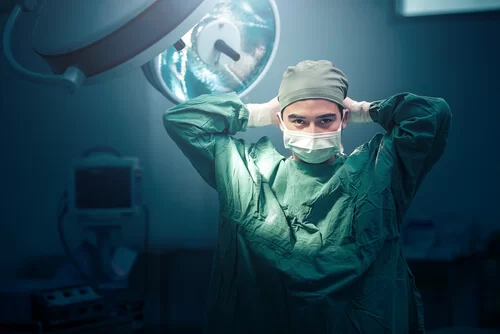
Nowhere is the principle that technology cannot replace skill more critical than in the realm of medicine and surgery. Modern operating rooms are filled with robotic assistants, high-definition imaging systems, and automated monitoring tools, but these instruments do not perform the healing on their own.
The Nuance of Surgical Touch and Judgment
A robotic surgical system can scale down a surgeon’s hand movements, eliminating tremors and allowing for tiny incisions. However, the machine cannot feel the resistance of the tissue, make split-second decisions when an anatomical variation is discovered, or exhibit the calm composure required during an emergency. In the operating room, it is universally acknowledged that technology cannot replace skill, as the machine is merely an extension of the surgeon’s trained intellect and steady hand.
[Advanced Surgical Equipment] ──> Guided by ──> [Surgeon's Expert Skill & Anatomy Knowledge]
                                                          │
                                                          ▼
                                             [Safe, Natural Results]
The Limitations of Diagnostic AI
Artificial intelligence has made incredible strides in reading medical imagery like X-rays and MRIs. While AI can flag potential problem areas, it frequently generates false positives or misses subtle, contextual clinical signs that a seasoned medical professional would notice instantly. Doctors understand that technology cannot replace skill when it comes to understanding a patient’s complete lifestyle, history, and physical presentation.
Seeking World-Class Professional Care Internationally
Because cutting-edge equipment is only as good as the specialist operating it, patients seeking aesthetic or reconstructive treatments must prioritize human credentials over the machinery a clinic advertises.
Choosing Specialized Centers of Excellence
When researching complex medical procedures, choosing a clinic with a proven track record of manual expertise is vital. For individuals seeking elite surgical intervention combined with profound anatomical understanding, exploring options for Plastic Surgery in Brazil provides access to surgeons who view their work as a delicate blend of medical science and fine art. They know that while modern devices assist in recovery, true aesthetic harmony relies entirely on manual technique.
Evaluating Real-World Evidence of Craftsmanship
Before committing to any profound physical or professional transformation, analyzing past evidence of human capability is essential. To see how specialized training translates into beautifully balanced outcomes that no automated machine could replicate, you can Check out the results of some patients. and witness the unmatched power of human precision.
The Creative Sectors: Why Technology Cannot Replace Skill in Art and Craft
Beyond the sciences, the creative industries offer a vivid demonstration of why technology cannot replace skill. The rise of generative AI tools has sparked a massive global conversation about the future of creativity, yet the human touch remains irreplaceable.
Authenticity and Emotional Resonance
An algorithm can analyze thousands of paintings and generate a new image based on statistical probabilities. However, it does not possess lived experiences, trauma, joy, or intent. It cannot tell an authentic story. The reality that technology cannot replace skill shines through when comparing a soul-stirring piece of handmade art to a mathematically generated digital image. The human element introduces deliberate imperfections that create genuine connection.
The Mastery of Physical Mediums
Whether it is sculpting marble, blowing glass, or crafting bespoke furniture, physical craftsmanship requires a complex loop of sensory feedback. A master craftsman adapts their pressure, speed, and angle based on how the material responds in real-time. This tactile mastery is a primary reason why technology cannot replace skill; a machine cannot replicate the intuitive adjustments made by an experienced artisan working with variable, natural materials.
The Danger of Over-Reliance on Modern Tools
When an industry forgets that technology cannot replace skill, the overall quality of work begins to degrade. Over-reliance on automation can lead to a phenomenon known as skill atrophy, where professionals lose their foundational abilities because they rely too heavily on systems to do the thinking for them.
Loss of Critical Problem-Solving: If a software system fails, an untrained worker is left completely helpless, whereas a skilled professional can pivot and complete the task manually.
Homogenization of Outputs: Relying entirely on automated templates and algorithms leads to a world where all websites, buildings, and consumer products look boringly identical.
Increased Risk Factors: In high-stakes environments, trusting an automated alert system without cross-checking it with human situational awareness can lead to catastrophic errors.
For those who wish to explore how top-tier institutions balance cutting-edge medical innovations with centuries-old traditions of clinical mastery, visiting Belvivere reveals an environment where advanced systems are strictly used to empower—not substitute—expert human hands.
Technology vs. Human Skill, By Domain
| Domain | What Technology Provides | What Human Skill Provides |
|---|---|---|
| Surgery | Precision instruments, imaging, robotic scaling of movement | Tactile judgment, split-second decisions, composure in emergencies |
| Diagnostic Imaging | Rapid pattern flagging in X-rays and MRIs | Contextual clinical judgment, catching subtle signs AI misses |
| Creative Work | Statistical generation of images or designs | Authentic emotional resonance and lived experience |
| Craftsmanship | Consistent, repeatable mechanical output | Real-time sensory adaptation to variable materials |
Frequently Asked Questions
Can robotic surgery systems replace a surgeon’s judgment?
No, robotic systems scale down hand movements and eliminate tremors, but they cannot feel tissue resistance or make split-second decisions when an anatomical variation arises.
Is diagnostic AI reliable enough to replace doctors?
AI can flag potential problem areas in medical imagery, but it frequently generates false positives or misses subtle clinical signs that an experienced professional would notice.
What is skill atrophy and why does it matter?
Skill atrophy occurs when professionals over-rely on automation and lose foundational abilities, leaving them helpless if a system fails instead of able to pivot and complete the task manually.
Final Thoughts: Harmonizing Tool and Talent
Ultimately, the argument is not that we should reject innovation. Modern advancements are wonderful assets that expand the boundaries of what humans can achieve. However, we must always remember that software, robotics, and algorithms are merely force multipliers.
A force multiplier is useless if the base force—human competence—is absent. Investing in training, practicing deliberate refinement, and valuing human judgment are the only ways to achieve excellence. No matter how advanced our world becomes, technology cannot replace skill, and human mastery will always remain the ultimate benchmark of quality.