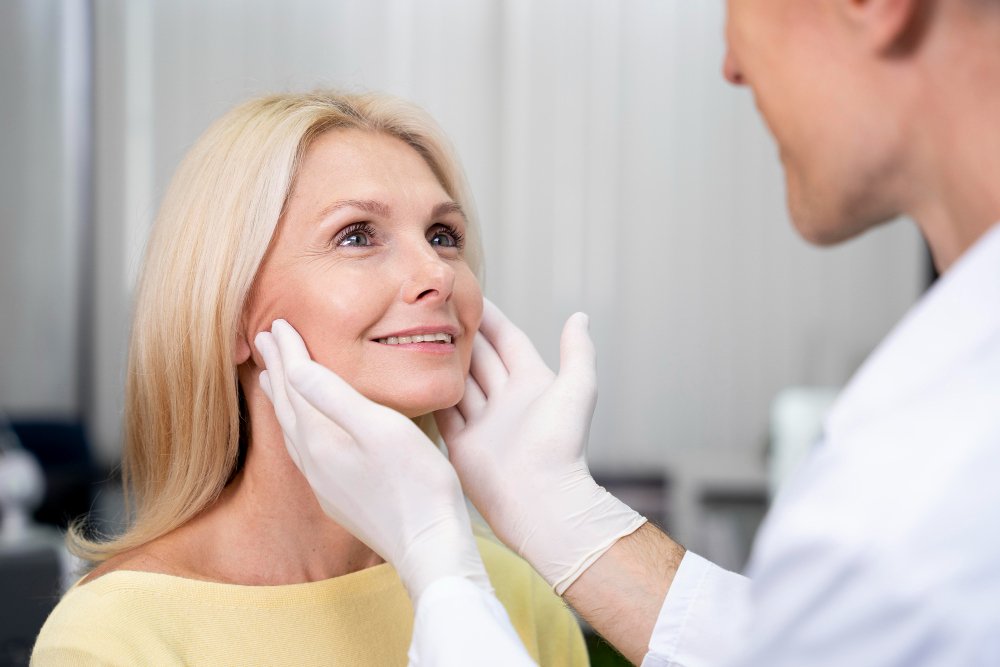
A full or poorly defined area beneath the jaw is not caused by one structure alone. Skin elasticity, superficial and deep fat, the platysma muscle, submandibular glands, chin projection, jaw shape and hyoid position can all influence the profile. Submandibular contouring should therefore begin with diagnosis—not with the assumption that every patient needs liposuction or deep neck surgery.
What can create fullness below the jaw?
| Finding | Possible contributor | Potential approach |
|---|---|---|
| Pinchable fat | Superficial fat | Selected liposuction |
| Vertical bands | Platysma separation or laxity | Platysmaplasty or neck lift |
| Deep fullness | Deep fat, digastric muscles or glands | Selected Deep Neck treatment |
| Weak profile despite little fat | Limited chin or mandibular projection | Skeletal or volume assessment |
An examination must also determine whether lower-face descent and jowls contribute to lost definition. A facelift matched to anatomy may then be considered with neck treatment. Deep Plane is one option, not a universal requirement.
When is gland reduction considered?
Submandibular glands produce saliva and normally sit beneath the jaw. If a gland is prominent, partial reduction may be discussed during selected Deep Neck procedures. It is not routine: apparent fullness may instead come from fat, muscle, skeletal proportions or gland position.
Gland treatment adds risks including bleeding, saliva collection, dry mouth and temporary or persistent changes in lower-lip movement. The expected contour change must be weighed against function. Learn more about Deep Neck anatomy and indications.
Previous procedures matter
Fillers, biostimulators, threads, permanent materials and energy treatments can change tissue planes. A complete history is essential. Dermatologic ultrasound may help when a product or its location is uncertain, but imaging does not guarantee that all material can be removed or dissolved.
Recovery and international-patient planning
Swelling, bruising, firmness, temporary numbness and asymmetry are expected early. Final definition develops over several months. Hematoma, infection, contour irregularity, salivary complications and nerve weakness require prompt assessment. Scars may be placed beneath the chin and, when a neck lift is included, around the ears and hairline; no scar is invisible.
Belvivere plans major facial and neck surgery in a hospital with anesthesia and postoperative monitoring. International patients need time in Criciúma for assessment and early follow-up; after major facial surgery, the team commonly plans at least 15 days in Brazil, adjusted to the operation and recovery. See our hospital and concierge support.
The goal is proportional definition
A well-planned result respects anatomy, facial identity and neck function. Sometimes the safest recommendation is a limited procedure, staged treatment or no surgery. Consultation is required to determine which structures can realistically be changed.