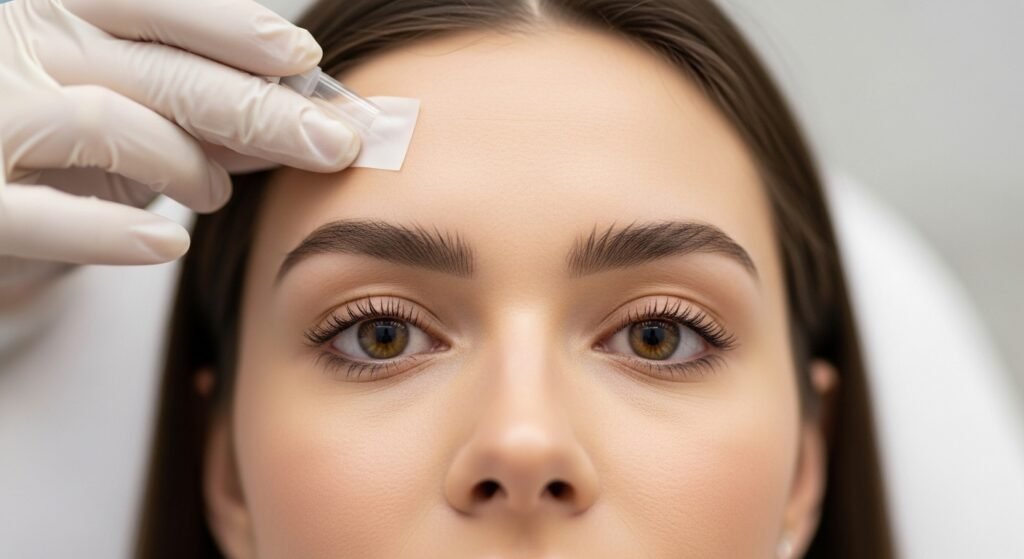
Nanofat vs. Microfat: Understanding the Differences and the Advances in Facial Plastic Surgery
The use of autologous fat in plastic surgery has evolved significantly over the past few years. Today, fat is no longer used solely as a volumizing material but has become a powerful tool for skin regeneration and rejuvenation. In this context, two terms are frequently mentioned: Microfat and Nanofat. Although they may sound similar, they serve very different purposes.
In this article, you will clearly understand the difference between Nanofat and Microfat, their indications, and why these techniques represent one of the greatest advances in modern facial plastic surgery.
Nanofat Has Nothing to Do with Nanoparticles
First, it is essential to clarify a common misconception:
Nanofat has absolutely nothing to do with nanoparticles.
The term Nanofat was introduced by Belgian plastic surgeon Dr. Patrick Tonnard, a pioneer in facial fat grafting. The name refers to the extremely fine consistency of the fat after a specific emulsification process, not to particles at a nanometric scale.
What Is Microfat?
Microfat is fat that is carefully harvested and processed to preserve viable fat cells, known as adipocytes.
Because these cells remain alive after transplantation, Microfat is primarily used for volume restoration, especially in facial procedures.
Key characteristics of Microfat:
- Contains living fat cells
- Integrates well with surrounding tissues
- Injected using fine cannulas
- Provides structural volume
Common indications:
- Facial volume restoration
- Deep facial folds
- Facial contouring
- Areas affected by age-related fat loss
In short, when the goal is to restore volume and contour, Microfat is the ideal technique.
What Is Nanofat?
Nanofat undergoes an additional process of emulsification and filtration, transforming the fat into an ultra-fine liquid.
During this process, the fat cells are intentionally disrupted. As a result, Nanofat does not provide volume.
However, it becomes extremely rich in:
- Stem cells
- Vascular stromal fraction
- Growth factors
These components are responsible for cellular regeneration and skin rejuvenation.
What Is Nanofat Used For?
Nanofat is used with a regenerative, not volumizing, purpose. Due to its liquid consistency, it is injected very superficially, often intradermally.
Main indications for Nanofat:
- Improvement of skin texture
- More even skin tone
- Increased skin vitality
- Treatment of fine lines
- Improvement of dark circles under the eyes
- Overall facial rejuvenation
Nanofat acts as a natural biostimulator, promoting progressive and long-lasting improvement in skin quality.
Practical Differences Between Nanofat and Microfat
Simply put:
- Microfat → restores volume, as it contains viable fat cells
- Nanofat → promotes skin regeneration, but does not add volume
Both are derived from the patient’s own fat, but they are processed differently and used for distinct clinical purposes.
A Major Advancement in Facial Plastic Surgery
In recent years, facial plastic surgery has begun to view fat not just as a filler, but as a biologically active tissue.
The introduction of Nanofat represents a major breakthrough because it allows:
- More natural rejuvenation
- Significant improvement in skin quality
- Progressive and long-lasting results
- Reduced reliance on synthetic fillers
This regenerative approach is increasingly incorporated into modern facial rejuvenation protocols.
Conclusion
Understanding the difference between Nanofat and Microfat is essential for setting realistic expectations and choosing the most appropriate treatment strategy.
While Microfat is ideal for restoring facial volume and contour, Nanofat is best suited for improving skin quality, texture, and overall rejuvenation.
When properly indicated and performed by an experienced plastic surgeon, these techniques — whether used alone or in combination — can deliver highly natural and sophisticated results.
👉 Modern plastic surgery goes beyond volume: it focuses on regeneration, skin quality, and natural outcomes.