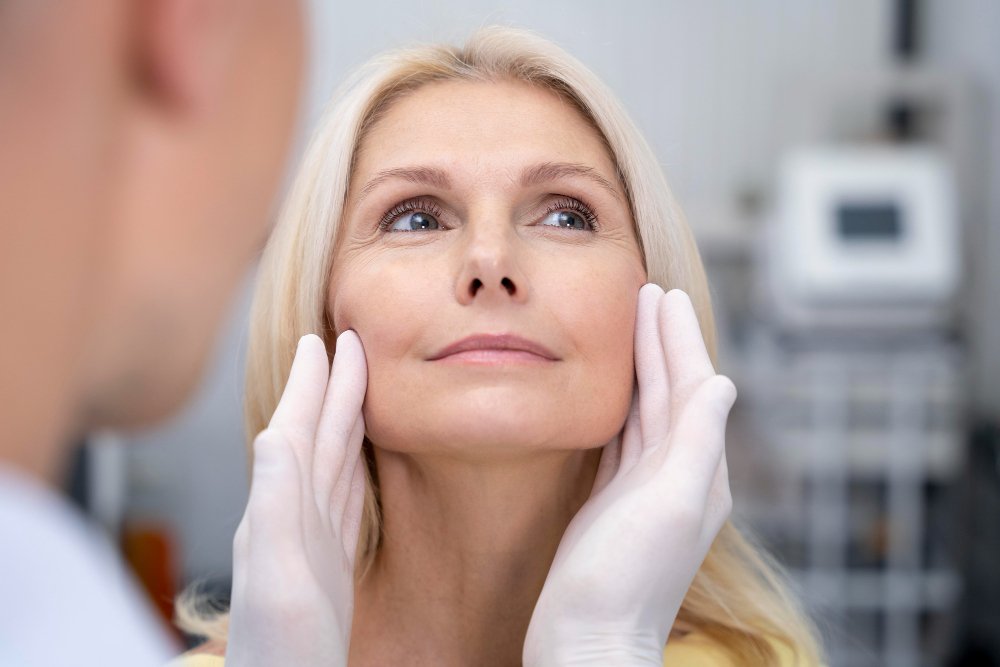
Under-Eye Circles and Blepharoplasty: What Surgery Can Treat
Under-eye circles are not a single diagnosis. Darkness may come from pigment, visible vessels, thin skin, a tear-trough shadow, lower-eyelid bags, edema or a combination. Blepharoplasty can improve selected structural causes, but it does not remove genetic pigmentation or guarantee a uniformly bright lower eyelid.
Four common components of under-eye circles
- Structural shadow: a hollow tear trough or abrupt eyelid-cheek transition changes how light falls on the face.
- Fat prominence: orbital fat pads can create a bulge with a shadow beneath it.
- Skin and vascular factors: thin skin may reveal underlying vessels; sun exposure and inflammation can intensify color.
- Edema: allergies, festoons, malar edema or reactions to previous fillers can create fluctuating puffiness.
Because several factors often coexist, the first question is not “Which filler should I use?” but “What is producing the darkness in this patient?”
When blepharoplasty may help
Lower blepharoplasty may improve bags, skin excess, lid support and the transition to the cheek. A transconjunctival approach avoids an external lower-lid incision when appropriate and allows selective treatment of the three fat compartments. Skin treatment and canthopexy are added only when indicated.
Blepharoplasty mainly changes structure and shadow. It cannot directly erase melanin, visible vessels or all skin-quality changes. Patients with prominent pigmentation may need dermatologic assessment, while malar edema and festoons require a different discussion.
Fat preservation, microfat and nanofat
A purely subtractive operation can worsen hollowness in a patient who already lacks volume. Dr. June Favarin’s planning is conservative: orbital fat may be preserved, selectively reduced or repositioned according to anatomy.
Microfat grafting can add structural volume to the A-frame, tear trough or lid-cheek junction. Nanofat is used more superficially for selected skin-quality goals; it does not provide structural filling or lift. Grafted fat is living tissue, but some volume is reabsorbed during early healing and retention cannot be guaranteed.
Why routine tear-trough filler deserves caution
Hyaluronic-acid filler can persist longer than expected, attract water, migrate or contribute to chronic or intermittent edema. For this reason, Dr. June does not consider tear-trough filler the default solution for every under-eye circle. In some patients, adding filler can turn a shadow problem into a long-lasting swelling problem.
Patients who previously received filler should report the product, date, quantity and episodes of swelling. Dermatologic ultrasound may be required before surgery. Hyaluronidase can modify or degrade hyaluronic acid, but its effect varies and complete removal cannot be guaranteed. More than one evaluation or treatment may be needed.
Evaluating the eyebrow and midface
A low eyebrow can crowd the upper eyelid, while midface descent can deepen the lid-cheek transition. Treating the lower eyelid alone may be incomplete when these neighboring structures are responsible for part of the appearance. Selected patients may benefit from Hybrid Blepharoplasty, video-assisted brow or midface surgery, or facial fat grafting.
Risks and limitations
Possible eyelid-surgery complications include bleeding, infection, dry-eye symptoms, difficulty closing the eyes, lower-lid retraction or ectropion, asymmetry, unfavorable scarring, prolonged swelling, altered sensation, visual disturbance and revision surgery. Fat grafting can add under- or over-correction, contour irregularity, cysts or variable retention.
The goal is improvement, not elimination of every dark tone or crease. A realistic plan identifies which component is surgically treatable and which may remain or need separate care.
Recovery
| Recovery Milestone | Typical Timing |
|---|---|
| Swelling/bruising most noticeable | First 48 hours |
| Socially presentable | 7–14 days |
| Makeup & structured exercise | ~30 days |
| Swimming or beach exposure | ~45 days |
Swelling and bruising often become more noticeable during the first 48 hours. Many patients are socially presentable in approximately 7 to 14 days, but residual edema and graft integration take longer. Makeup and structured exercise are commonly considered around 30 days, and swimming or beach exposure around 45 days, subject to individual medical clearance.
Sudden pain, rapidly increasing swelling, bleeding or any visual change must be reported immediately.
Planning treatment from abroad
International patients can begin with video consultation and standardized photographs. Eye symptoms, prior surgery and injectables are reviewed, and ophthalmologic assessment or ultrasound may be requested. Patients generally arrive in Criciúma one or two days before surgery and remain at least 15 days, with flight clearance after examination.
Belvivere’s concierge support assists with logistics. Explore blepharoplasty safety and recovery, facial fat grafting and patient transformations.