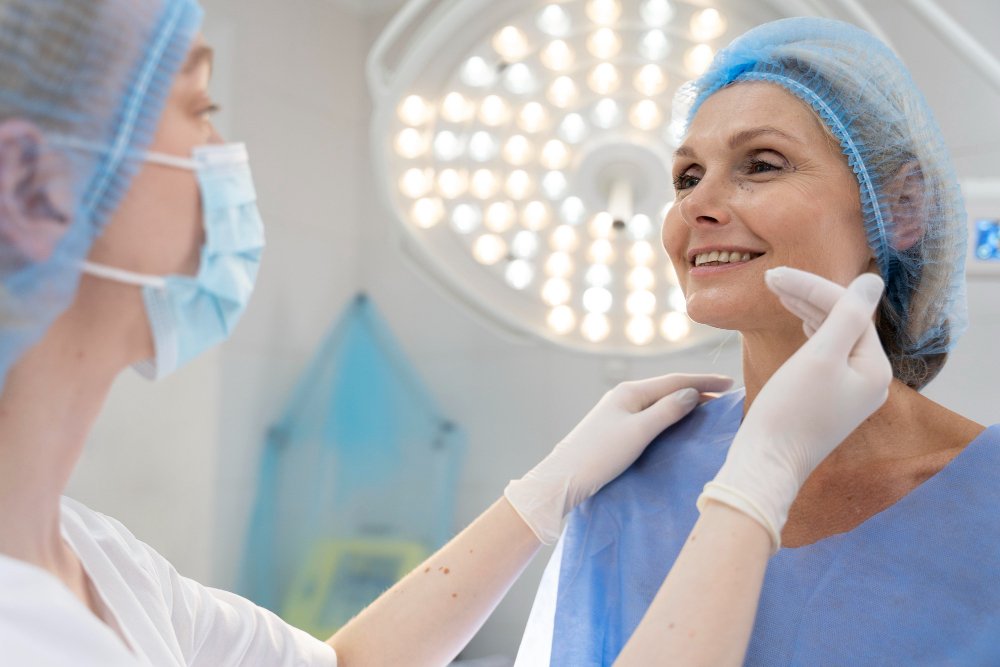
Facelift results do not expire on a fixed date. Surgery can reposition tissues, but the face continues to age afterward. How long the improvement remains meaningful depends on the original anatomy, the regions treated, tissue quality, weight stability, lifestyle, healing and the comparison being made—not simply on whether the operation was called SMAS or Deep Plane.
What does “lasting” mean after a facelift?
A patient can continue to look different from how they would have looked without surgery even as new aging changes develop. This is different from promising that the face will remain unchanged. Jowls, skin laxity, volume loss and neck changes may recur at different rates, and residual concerns can remain from the beginning.
| Factor | How it can affect the result over time |
|---|---|
| Starting anatomy | Skin, facial shape, skeletal support and degree of tissue descent influence achievable correction |
| Scope of surgery | A limited procedure cannot be expected to maintain correction in untreated regions |
| Weight stability | Major loss or gain can change facial volume and skin support |
| Nicotine and sun exposure | Can worsen healing and accelerate visible skin aging |
| Previous procedures | Scars, fillers, devices and surgery may alter tissue behavior |
| Ongoing aging | Bone, fat, ligaments, muscle and skin continue to change |
Does Deep Plane last longer than other techniques?
No technique name guarantees greater longevity. Deep Plane may be useful when ligament release and deeper repositioning are appropriate for lower-face anatomy. A well-indicated SMAS approach may be more suitable in another patient. Video-assisted surgery generally addresses the upper face or selected midface descent, while Neck Lift and Deep Neck treat different cervical layers.
Comparisons claiming that one technique lasts a precise number of years are misleading because studies, definitions and patient groups differ. Surgical quality includes diagnosis, release, vector, fixation, skin handling and postoperative care—not depth alone. See how facelift techniques are matched to anatomy.
Volume, skin and untreated regions
A facelift repositions tissues but does not replace every volume deficit or correct pigmentation and texture. Selected microfat may restore volume; skin-directed treatments may address surface concerns. Neither is mandatory. Treating untreated changes later does not necessarily mean the facelift has “failed.”
Rapid weight loss, including weight change associated with GLP-1 medication, can produce new facial hollowing. Weight should be stable before elective facial surgery whenever possible.
Can maintenance prolong a result?
Sun protection, avoiding nicotine, stable weight and appropriate skin care support overall facial aging and scar quality. Injectables or devices should not be presented as required maintenance and must be chosen carefully, especially after surgery. Excess filler can distort proportions rather than preserve a surgical result.
When should revision be considered?
Revision should not be planned during early swelling or scar maturation. The first operation changes tissue planes, vascularity and anatomy; a second procedure is not a minor extension of the first. Operative records and dermatologic ultrasound may be useful when previous surgery or injectables complicate assessment.
Risks and realistic expectations
Facelift risks include hematoma, infection, skin-healing problems, visible scars, hairline changes, asymmetry, sensory or motor nerve injury, salivary complications, contour irregularity and revision. A natural appearance and a specific duration cannot be guaranteed. The objective is a meaningful, proportionate improvement that preserves identity while acknowledging continued aging.
International follow-up
International patients need enough time in Brazil for early review—commonly at least 15 days after major facial surgery—and a long-term follow-up plan after returning home. Belvivere’s concierge team supports logistics, while medical clearance determines travel timing.