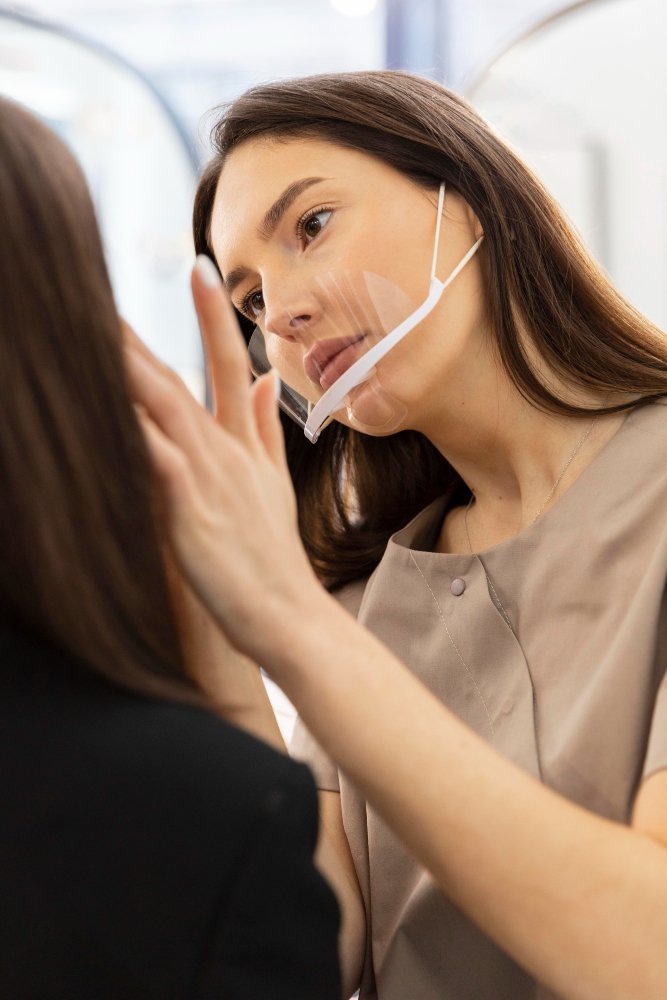
A Deep Plane facelift is one method of repositioning the lower face and selected cheek tissues. It is not a “stronger” facelift, a guarantee of naturalness or the best operation for every patient. Its value depends on anatomical diagnosis, the extent of release, vector, surgeon experience and whether the neck, eyelids, brow, volume or skin require separate treatment.
What does “Deep Plane” mean?
The technique works beneath the superficial musculoaponeurotic system (SMAS) in selected areas. By releasing specific retaining ligaments, the surgeon can mobilize deeper tissues as a unit rather than relying primarily on skin tension. The skin is then redraped and trimmed with controlled—not literally zero—tension.
The exact dissection and extent vary. A label alone does not describe how much of the cheek, jawline or neck is treated.
What can it improve—and what can it not?
| May improve | Usually requires separate assessment |
|---|---|
| Jowls and lower-face descent | Brow position and upper eyelids |
| Jawline definition | True eyelid ptosis or ocular disease |
| Selected cheek descent | Skin texture and pigmentation |
| Face-neck transition | Structural volume loss |
| Selected folds related to descent | Deep central-neck anatomy or skeletal limits |
Deep Plane surgery does not stop aging, eliminate all folds or guarantee a particular duration. Some patients are better served by another SMAS approach, a limited operation, staged treatment or no surgery.
How the neck changes the plan
A facelift may improve the lateral neck, but central neck fullness can arise from superficial fat, platysmal bands, subplatysmal fat, digastric muscles, prominent submandibular glands, chin position or hyoid anatomy. Neck Lift and Deep Neck are not synonyms and are not automatic additions.
When deep-neck treatment is considered, each structure is assessed individually. Submandibular-gland reduction is optional and permanent, with specific bleeding, nerve, salivary and contour risks. It should not be performed routinely. Learn more about Deep Neck surgery.
Volume, injectables and dermatologic ultrasound
Lifting repositions tissue but does not replace all lost volume. Conservative microfat grafting may be considered for selected hollows; nanofat serves superficial skin-quality indications rather than structural filling.
Previous hyaluronic-acid filler, biostimulators, threads, PMMA, silicone and energy-based treatments may affect diagnosis and dissection. Dermatologic ultrasound may be requested to map material, edema or fibrosis. Findings can support observation, targeted treatment, a modified operation or postponement.
Risks and realistic recovery
Potential complications include hematoma, infection, skin compromise, hairline or scar changes, temporary or persistent sensory alteration, weakness involving facial-nerve branches, asymmetry, contour irregularity, thrombosis, anesthetic events and revision surgery. Working in a deep plane does not remove these risks.
Swelling and bruising are most evident early. Tightness, numbness and asymmetry related to edema are common during initial healing. Many patients begin limited social activity after about two weeks, but residual swelling, sensation and scars continue to mature for months. Recovery is longer when eyelid, brow, midface or neck procedures are combined.
International care at Belvivere
International patients begin with remote screening, but the final plan is confirmed only after an in-person examination. Major facial surgery is performed at Hospital São José, with anesthesia and postoperative monitoring appropriate to the procedure.
Belvivere generally plans at least 15 days in Brazil after major facial surgery, adjusted to the operation and recovery. The bilingual concierge service assists with accommodation, transportation and coordination; it does not replace medical care. Return flights should remain flexible and require clinical clearance.
How is candidacy decided?
The consultation evaluates facial shape, tissue descent, skin quality, neck anatomy, ocular health, medical conditions, nicotine exposure, weight stability, medications and expectations. The safest plan may be less extensive, divided into stages or postponed.
A well-planned facelift aims to improve age-related changes while preserving expression and identity. Deep Plane is one useful technique within that decision—not a promise of superiority.
This article is educational and does not replace an individualized medical evaluation.