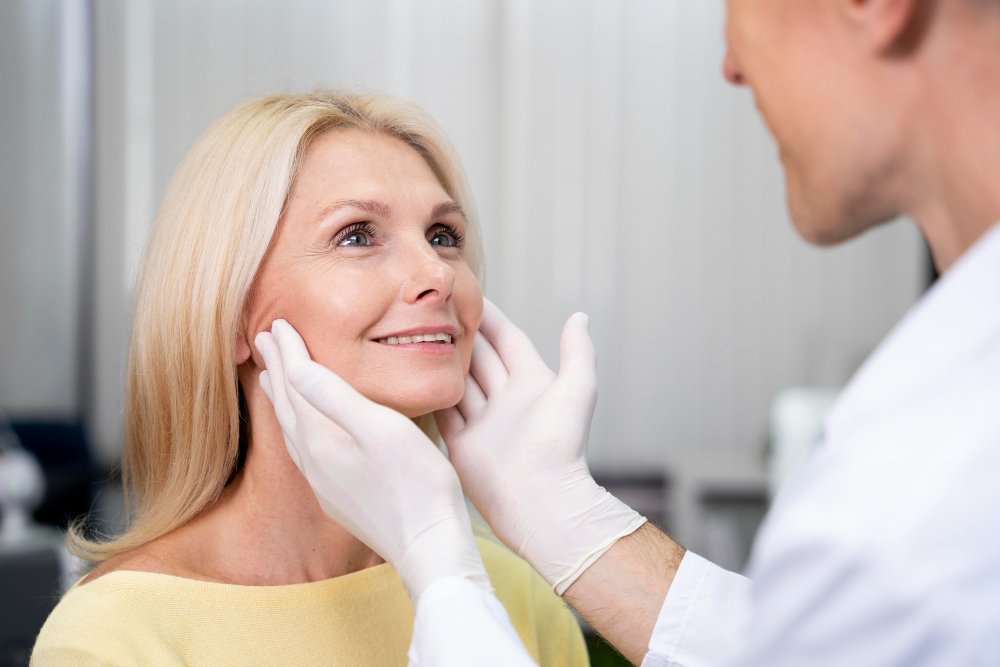
Submandibular Contouring in Brazil has become a highly sought-after solution for individuals aiming to achieve a sharp, well-defined jawline and a youthful neck profile. The lower third of the face plays a vital role in defining overall facial attractiveness, symmetry, and youthful structural harmony. However, when the aging process takes its toll or genetics dictate a lack of definition, the area directly beneath the mandible bone can lose its crisp silhouette. Understanding the complex anatomy of this region is essential for anyone considering cosmetic refinement.
To achieve lasting improvements in facial structure, a plastic surgeon must look beyond the surface layers of the skin. The lower jaw and upper neck house a delicate network of muscles, glands, fat compartments, and supporting structural ligaments. Advanced Submandibular Contouring in Brazil addresses these deep layers systematically rather than simply tightening the skin horizontally. This comprehensive anatomical approach ensures that the final contours look completely natural, elegant, and harmonious from every angle.
The Anatomical Complexity of the Lower Neck Region
The area situated directly beneath the lower border of the mandible is known as the submandibular triangle. To safely execute a procedure involving Submandibular Contouring in Brazil, a medical specialist must possess an intimate understanding of the anatomical boundaries that form this zone. The region is bounded by the lower margin of the jawbone and the digastric muscle, housing several vital structures.
+-----------------------------------------------------------------+
| LOWER FACE STRUCTURAL STRATEGY |
+------------------------------------+----------------------------+
| Structural Jowls & Jawline Laxity | Mandibular Deep Plane |
+------------------------------------+----------------------------+
| Platysmal Bands & Sagging Neck | Platysmaplasty Integration |
+------------------------------------+----------------------------+
| Depleted Chin & Pre-Jowl Sulcus | Autologous Fat Grafting |
+------------------------------------+----------------------------+
| Surface Wrinkles & Texture Damage | Laser / Chemical Peels |
+------------------------------------+----------------------------+
Beneath the superficial layers of skin and fat lies the platysma muscle, a wide sheet of tissue that blankets the front of the neck. Deep to this muscle are the submandibular salivary glands, the facial artery and vein, and critical motor nerves that control lower lip movement. When performing structural rejuvenation, a surgeon must meticulously navigate around these delicate structures to alter the profile safely and successfully.
The Role of Glands and Deep Fat
A major reason why generic treatments fail to improve the jawline is that they only target superficial fat. Often, a heavy appearance in the neck is caused by hypertrophy of the submandibular salivary glands or deep fat compartments located beneath the platysma muscle.
For individuals seeking world-class medical standards and highly precise evaluations, visiting the official Belvivere website provides detailed technical insights. Furthermore, international patients planning a safe and predictable surgical journey can find elite treatment opportunities by exploring options for Plastic Surgery in Brazil, a country widely celebrated for its clinical innovations.
Structural Changes and the Aging Process
As the human body matures, the lower face experiences a predictable sequence of structural shifts. Gravity, loss of skin elasticity, and bone resorption pull the tissues downward, muddying the transition between the chin and the neck line.
The Descent of Superficial and Deep Tissues
Over time, the supporting retaining ligaments along the lower jaw gradually weaken and stretch. This allows superficial fat pads to slide downward, accumulating over the mandibular border to create visible jowls. Simultaneously, the platysma muscle separates in the midline, creating vertical cords or bands that run down the neck, directly impacting the efficacy of Submandibular Contouring in Brazil.
Timeline of Structural Lower Face Aging:
Stage 1: Subtle softening of the jawline definition; minor pre-jowl hollowing.
Stage 2: Superficial fat descends past the mandible; early jowl formation.
Stage 3: Platysma muscle separates, creating noticeable vertical neck bands.
Stage 4: Accumulation of deep fat and tissue laxity under the chin.
When these deep structures drop, they obscure the natural acute angle between the chin and the neck, which ideally should be between 90 and 105 degrees. Restoring this youthful geometric relationship requires a treatment plan that addresses muscle laxity, glandular prominence, and misplaced fat compartments all at once.
Addressing the Unique Submandibular Contouring in Brazil Protocol
Every face possesses a highly distinct anatomical layout based on gender, ethnicity, and genetic baselines. Masculine jawlines generally benefit from wider, more angular definition, while feminine profiles require soft, fluid transitions. A customized Submandibular Contouring in Brazil protocol maps these differences carefully to ensure that the modifications enhance the patient’s inherent individuality without introducing unnatural proportions.

Surgical Options for Deep Profile Refinement
For patients experiencing moderate to severe tissue sagging, heavy jowls, or a complete loss of neck definition, structural surgery remains the absolute gold standard for achieving a lasting transformation.
Deep Platysmaplasty and Gland Management
The core procedure utilized for definitive Submandibular Contouring in Brazil is a deep-plane platysmaplasty. Working through a discreet, hidden incision under the chin, the surgeon gains direct access to the deeper structures of the neck. The superficial fat is safely contoured, and the platysma muscle is opened to address the deep tissues beneath it.
Anatomical Steps for Deep Profile Refinement:
* Opening the platysma muscle to expose the deep submandibular space.
* Removing or repositioning deep, sub-platysmal fat compartments safely.
* Evaluating and conservatively shaving hypertrophic salivary glands if needed.
* Tightening the platysma muscle edges together like a firm hammock.
If the submandibular glands are large and bulging, causing a persistent fullness under the jaw, a skilled surgeon can carefully reduce their volume or suspend them behind the muscle layer. The edges of the platysma muscle are then sutured tightly together in the center. This builds a strong, long-lasting muscular hammock that instantly tightens the entire upper neck profile.
Integrating the Deep Plane Facelift
Surgical Submandibular Contouring in Brazil is rarely performed in complete isolation. To achieve a perfectly fluid result, it is frequently combined with a deep-plane facelift. By releasing the retaining ligaments along the jawline and lifting the facial tissues vertically, the surgeon creates a continuous, sharp line extending from the chin all the way to the earlobe, completely erasing heavy jowls.
Non-Surgical Techniques for Early Intervention
Not every individual requires an open surgical procedure to refresh their lower face profile. For younger patients or those experiencing early signs of aging, advanced minimally invasive treatments offer incredible preventative benefits.
Injectable Biostimulators and Targeted Fillers
For mild tissue laxity, injectable treatments can provide excellent structural support. Collagen biostimulators are placed strategically along the jawline to trigger the body’s natural collagen production over several months. This gradually thickens the dermis, providing a subtle, non-surgical lift that reinforces Submandibular Contouring in Brazil principles.
Multi-Layer Rejuvenation Strategy:
Deep Structural Layer: Deep plane muscle lifting / Gland suspension
Mid-Dermal Layer: Collagen biostimulation / Volume restoration
Epidermal Surface: Medical fractional lasers / Targeted skin peeling
Hyaluronic acid dermal fillers can also be utilized to re-contour a receding chin or sharpen a soft mandibular angle. By restoring structural volume directly over the bone, fillers stretch the overlying skin slightly, smoothing out the appearance of early jowls without the need for traditional surgery.
Energy-Based Tissue Tightening
Advanced energy-based devices, such as micro-focused ultrasound or temperature-controlled radiofrequency, are frequently incorporated into the clinical plan. These technologies deliver targeted thermal energy deep into the SMAS and muscle layers, causing immediate tissue contraction and stimulating long-term cellular renewal to keep the neck skin firm.
What to Expect During the Recovery Phase
Understanding the post-operative healing timeline helps patients prepare effectively, ensuring a comfortable, stress-free recovery journey.
The Initial Healing Process
Following surgical Submandibular Contouring in Brazil, mild swelling, bruising, and a sensation of firmness or tightness under the chin are entirely normal. Because modern deep-plane techniques preserve the skin’s natural blood vessels, healing is generally efficient and manageable.
Expected Surgical Recovery Timeline:
Days 1-3: Peak swelling; rest comfortably with your head elevated.
Days 7-10: Removal of fine surgical sutures from beneath the chin.
Weeks 2-3: Swelling resolves noticeably; safe to return to light work.
Months 1-6: Internal tissues heal completely; final sharp contours emerge.
Patients are advised to wear a supportive compression chin strap during the initial days to reduce fluid accumulation and support the newly sculpted muscle layers. Avoiding strenuous physical activity and keeping the neck straight while resting contribute significantly to a seamless recovery.
Long-Term Results and Tissue Settling
Over the course of several months, the residual internal swelling completely disappears, allowing the highly defined, crisp contours of your jawline to show beautifully. The incisions fade into thin, pale lines hidden within the natural skin creases under the chin, rendering them completely invisible to the naked eye.
Embracing a Path of Structural Discretion
The true measure of success for any lower face modification is a natural-looking result that preserves your unique identity while restoring a youthful appearance. When a procedure is carried out with precision, your expressions remain perfectly fluid, and the results blend seamlessly with your natural features.
To observe real-world examples of how this meticulous, layered approach beautifully shapes the jawline and neck profile, Check out the results of some patients. Reviewing these genuine transformations illustrates the exceptional level of clinical skill and artistic care involved in modern aesthetic medicine.
Ultimately, choosing to undergo professional Submandibular Contouring in Brazil provides a safe, highly predictable path to comprehensive lower facial rejuvenation. By prioritizing deep structural balance and respecting your individual anatomy, modern plastic surgery successfully delivers stunning outcomes that stand beautifully against the test of time.