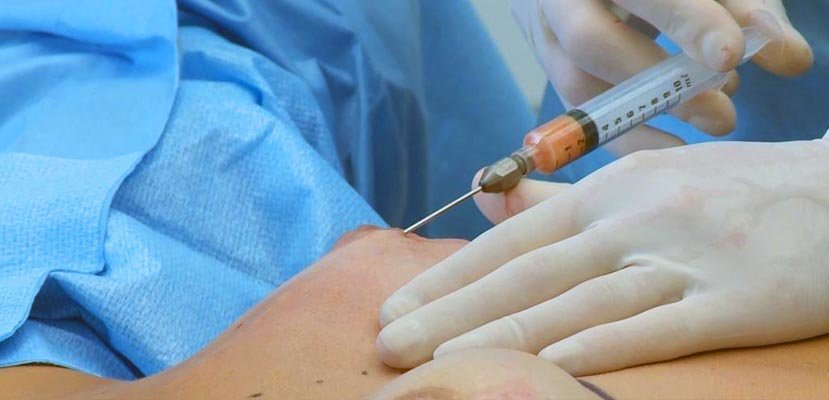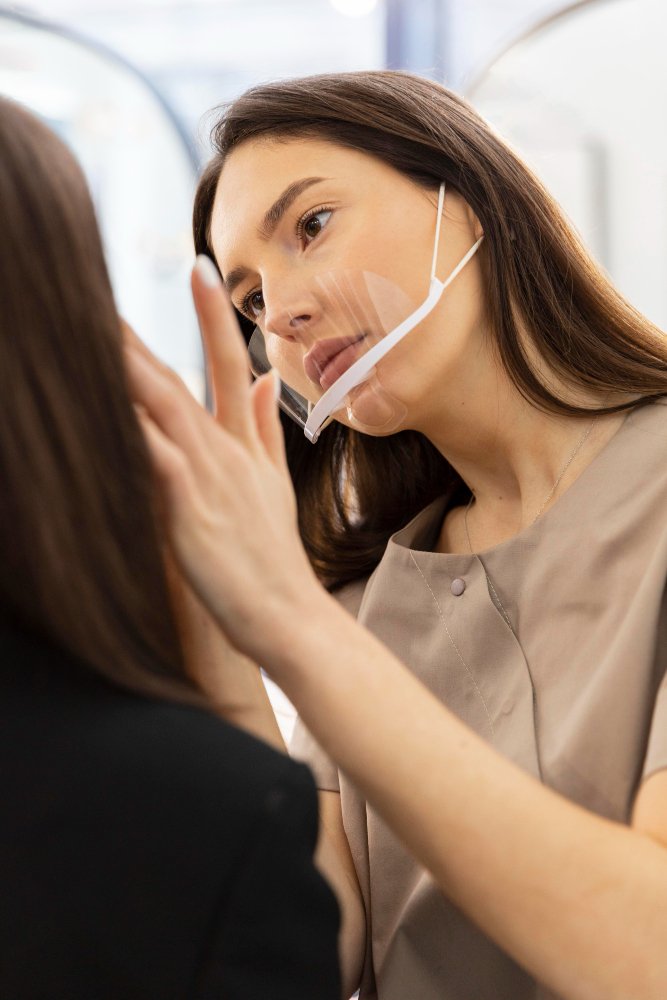
Facial fat grafting is not simply “removing fat and injecting it.” Harvesting, processing and placement all influence tissue quality, safety and integration. No preparation method can guarantee survival or eliminate irregularities, and the best method depends on the intended use.
Three stages of facial fat grafting
| Stage | Objective | Important consideration |
|---|---|---|
| Harvesting | Collect viable tissue with limited trauma | Donor site, cannula, pressure and handling matter |
| Processing | Separate useful tissue from excess fluid, oil and debris | Washing, filtration or centrifugation have different protocols |
| Placement | Distribute small parcels in selected planes | Large deposits increase irregularity and fat-necrosis risk |
Donor site and harvesting
The abdomen is commonly used in Dr. June Favarin’s practice, although donor selection depends on available tissue and the complete operation. Gentle aspiration and appropriate cannulas aim to limit mechanical injury. Harvesting still creates a donor-site wound with possible bruising, soreness, irregularity or infection.
Processing is matched to purpose
Microfat preserves viable adipocytes and is used for selected structural volume. Nanofat is produced through further emulsification and filtration; most mature adipocytes are disrupted, so it should not be described as a volumizing filler. It may be considered for selected superficial skin-quality indications, but evidence and response vary. It does not lift tissues or guarantee cellular regeneration.
See the microfat versus nanofat comparison.
Placement determines contour and safety
Fat is placed in small parcels across appropriate planes rather than as a large bolus. Around the eyes, thin tissues make conservative volume and precise distribution especially important. The forehead, temples, upper and lower orbital contours and lid-cheek transition may require different depths. Anatomy also matters because intravascular injection can cause rare but severe complications.
Why retention varies
Integration depends on vascular contact, parcel size, recipient tissue, technique, smoking, inflammation, previous procedures and postoperative biology. Some grafted fat is reabsorbed. Retained fat can enlarge or shrink with weight change, including rapid loss associated with GLP-1 medication. A fixed survival percentage or unchanged permanent volume should not be promised.
Previous fillers and surgical planning
Fillers, biostimulators, threads, PMMA, silicone and prior fat grafts can distort volume or contribute to fibrosis and edema. Dermatologic ultrasound may help map previous material. Hyaluronidase acts only on hyaluronic acid and does not reverse all chronic changes. Read about ultrasound and planning after injectables.
Risks and recovery
Swelling, bruising, temporary asymmetry and donor-site tenderness are expected. Possible complications include infection, prolonged edema, undercorrection, overcorrection, contour irregularity, oil cysts, fat necrosis, pigmentation change and rare vascular injury. Results are evaluated after swelling settles and integration stabilizes; refinement may occasionally be appropriate.
International-patient care
Travel timing depends on whether grafting is isolated or combined with eyelid, brow, facelift or neck surgery. Belvivere performs surgical cases in a hospital and coordinates early follow-up in Criciúma. International patients can review the preparation checklist and concierge support.