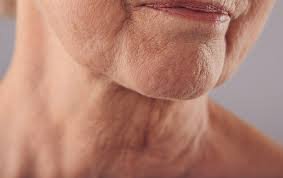
An over-treated neck may show hollowing, visible platysmal bands, irregular adherence, asymmetry or an unnaturally tight contour after liposuction, Neck Lift or other cervical surgery. Revision begins by identifying which layers were removed, scarred, displaced or tightened. A two-stage repair can be useful in selected cases, but it is not mandatory for every patient and cannot guarantee restoration of the original anatomy.
What can create an over-treated appearance?
| Finding | Possible anatomical cause | Planning concern |
|---|---|---|
| Central hollowing | Excess superficial or deep tissue removal | Volume cannot always be fully restored |
| Cobra-neck contour | Central depression with residual lateral fullness or banding | Requires evaluation of fat, platysma and scar adhesion |
| Cobblestone skin | Irregular subcutaneous removal or tethering | Additional liposuction may worsen the defect |
| Restricted movement or tightness | Fibrosis, scar contracture or excessive tension | Function and vascularity come before refinement |
| Persistent asymmetry | Unequal removal, muscle position or pre-existing anatomy | Perfect symmetry may not be achievable |
Assessment before another operation
Revision should not be planned from photographs alone. Examination includes skin mobility, scar location, platysma behavior, submental volume, deep-neck structures, jaw and chin support, swallowing symptoms and prior nerve changes. Operative reports and preoperative photographs are valuable. Dermatologic ultrasound may help map fibrosis, residual filler or uncertain superficial tissues, but it cannot define every surgically altered structure.
Why treatment may be staged
When tissues are severely scarred, thin or adherent, the first priority may be to release selected tethering and allow the tissue bed to mature before definitive contouring. In another patient, one carefully limited revision—or no further surgery—may be safer. Staging is a strategy based on tissue condition, not a universal protocol.
A fixed six- or nine-month interval should not be promised. Timing depends on inflammation, scar maturation, vascularity, symptoms and the procedures already performed. Operating during active swelling or immature fibrosis can make assessment less reliable and increase risk.
The role and limits of fat grafting
Microfat may be considered to restore selected volume deficits or soften contour transitions. Retention is variable, multiple sessions may be needed and grafting into scarred tissue can be less predictable. Fat should not be described as guaranteed “regeneration” or as a way to recreate removed anatomy exactly. Irregularity, resorption, cysts, infection or excess volume are possible.
Revision risks
Secondary neck surgery may carry increased risks of skin compromise, hematoma, infection, prolonged swelling, contour irregularity, visible scars, sensory change and injury to motor nerves or salivary structures. Previous surgery may have changed planes and blood supply. Additional platysmal release or deep-neck work must be selected cautiously; more dissection is not automatically corrective.
Planning revision in Brazil
International patients should send operative records before travel, but the final recommendation is made only after in-person examination. Major revision surgery is performed at Hospital São José when indicated. Patients generally need at least 15 days in Brazil, often longer depending on complexity. Belvivere’s concierge team helps with accommodation and transport; medical follow-up remains with the surgical team.
For related anatomy, see Deep Neck candidacy and risks and the guide to ultrasound before facial surgery.