Skin-tightening devices may improve selected wrinkles, texture changes and mild laxity. They do not release retaining ligaments, reposition a descended cheek or correct platysma and deep-neck anatomy. The appropriate comparison is therefore not “device versus facelift,” but surface remodeling versus structural repositioning.
Match the treatment to the anatomical layer
| Main concern | Possible role of technology | Important limitation |
|---|---|---|
| Fine lines and texture | Selected laser, radiofrequency or microneedling treatment | Does not correct deep tissue descent |
| Mild skin laxity | Modest tightening may occur | Response varies by device and protocol |
| Volume loss | No predictable structural replacement | May require conservative fat grafting |
| Low brow, cheek descent or jowls | Limited effect on true position | Surgical release and repositioning may be relevant |
| Platysmal bands or deep-neck fullness | No selective correction of each structure | Requires cervical anatomical assessment |
How the main device categories differ
Laser resurfacing
Ablative or fractional laser primarily treats epidermal and dermal concerns. It can improve selected wrinkles, texture and photodamage. Skin type, pigment history, prior isotretinoin, scar tendency and recovery capacity influence candidacy. Laser does not elevate a low brow or reposition jowls.
Radiofrequency
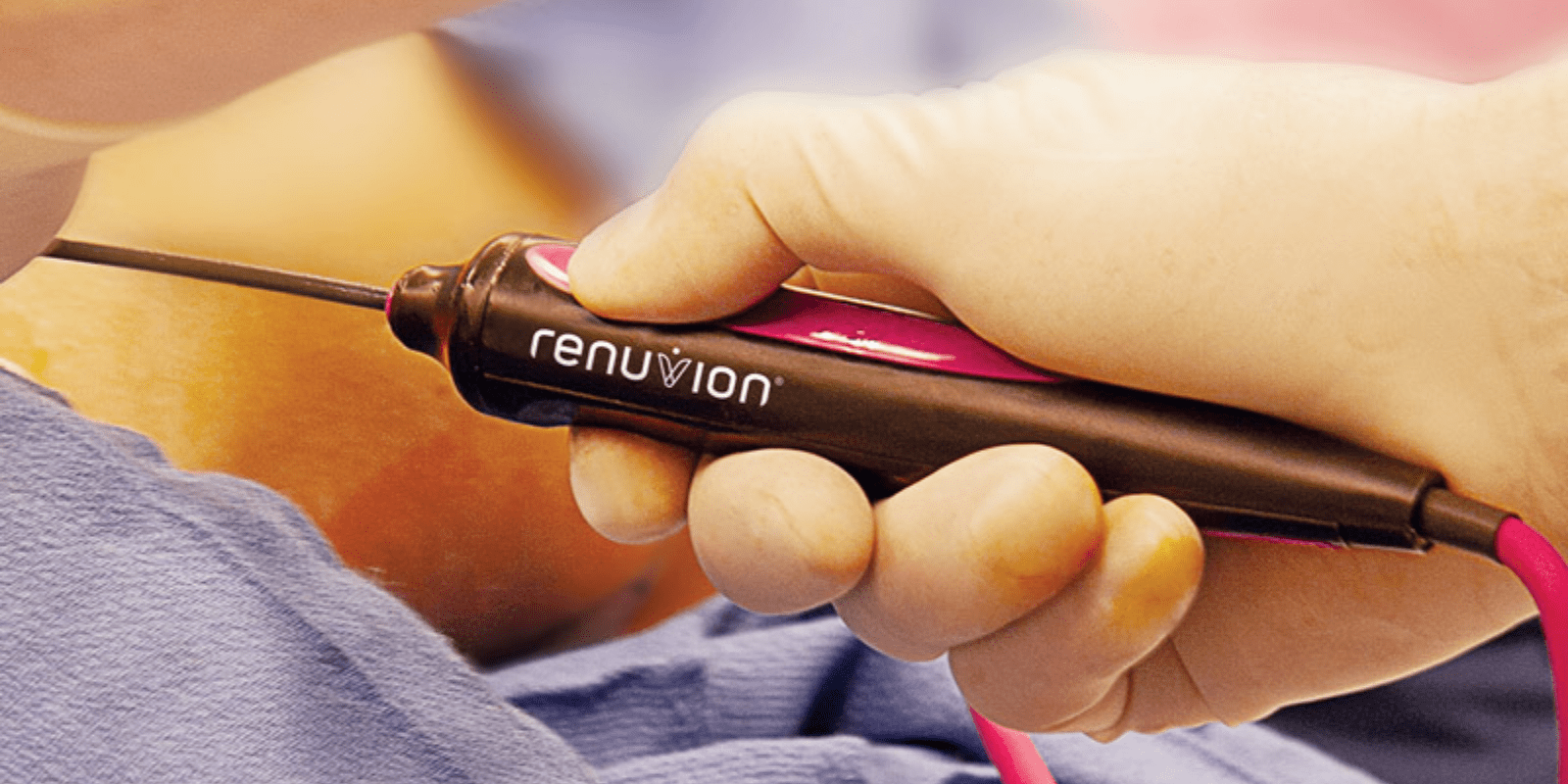
Surface, microneedling and subdermal radiofrequency use different delivery systems and depths. Their biological effect depends on tissue temperature, exposure time, electrode design and operator control. Published evidence cannot be transferred automatically from one platform to another.
Focused ultrasound
Focused ultrasound creates thermal injury at selected depths. A small prospective comparison of radiofrequency and focused ultrasound found short-term improvements with both modalities, but included only 36 patients and three months of follow-up. It cannot establish equivalence to surgery or predict results for another device.
Reaching the SMAS is not the same as lifting it
A marketing claim that energy reaches the SMAS does not make the procedure a nonsurgical facelift. Surgical lifting can release ligaments, mobilize tissue and fix it in a planned vector. Thermal injury creates focal remodeling without the same mechanical repositioning. Depth alone does not define outcome.
More energy can increase harm rather than benefit
Potential complications include prolonged redness, pain, burns, pigment change, fat loss, contour irregularity, fibrosis, infection and sensory or motor nerve symptoms. A 2022 systematic review of subsurface radiofrequency noted limited evidence quality and described facial fat atrophy among reported problems. In October 2025, the U.S. FDA separately warned about serious complications reported with certain RF microneedling uses, including burns, scarring, fat loss and nerve damage.
Settings selected for the cheek should not be copied automatically to the thin lower eyelid or a region near vulnerable motor branches. More passes or higher energy do not guarantee more tightening.
Previous devices matter before facial surgery
Energy treatments can leave edema, fat loss, adhesions or fibrosis that alter examination and dissection. Patients should document:
- Device and manufacturer when known
- Treatment date, anatomical area and number of sessions
- Needle depth, cartridge or energy settings when available
- Persistent swelling, numbness, burns, nodules or contour change
- Fillers, biostimulators, threads or permanent materials in the same region
When examination suggests filler, fluid or fibrosis, dermatologic ultrasound may help define the tissue. The safest decision may be observation, staged dermatologic treatment or postponing surgery until inflammation settles.
When surgery addresses a different problem
Video-assisted brow and midface surgery, Hybrid Blepharoplasty, SMAS or Deep Plane facelift, Neck Lift and Deep Neck procedures treat different structures. None is simply a stronger version of skin treatment. Surgery also does not correct every pigment, pore or fine line.
A device can complement surgery when surface quality has a separate indication. Combining treatments increases inflammation and recovery, so staging may be preferable in patients with pigment risk, uncertain tissue response or extensive surgery.
Recovery and international planning
Visible redness and swelling may resolve in days after conservative treatment, while burns, pigment change, numbness or contour loss can persist. Patients should seek assessment for blistering, increasing pain, weakness, a new depression or prolonged edema before another session.
International patients need time for in-person examination and access to follow-up. For surgical treatment, Belvivere operates at Hospital São José. The concierge team assists with accommodation and transport but does not replace medical monitoring.
Questions to ask before choosing a device
- Is the concern skin quality, mild laxity, volume loss or tissue descent?
- Which device, depth and settings are proposed for this region?
- What improvement is realistically measurable?
- Which complications are specific to this technology?
- Could the treatment complicate a future operation?
Primary and regulatory sources
- Prospective comparison of radiofrequency and focused ultrasound
- Systematic review of subsurface radiofrequency treatments
- FDA safety communication on RF microneedling, October 15, 2025
This article is educational and does not replace an individualized medical evaluation.